
However knowing how to enjoy this drink, requires three tips, desire to be happy, a good sparkling drink and the perfect glass.

Sin embargo saber disfrutar esta bebida requiere de tres consejos, voluntad para querer ser Feliz, una buena bebida espumante y la copa perfecta.
He aquí unos sabios concejos para disfrutar esta gran bebida deliciosa.
Here all best tips to enjoy this wonderful drink.
Champagne is only from France.
«Champagne» is often used as a catch-all term for sparkling wine, but this is technically not correct. Champagne is a specific sort of sparkling wine made in the Champagne region of France, and legally, only wines from this region made with the Méthode Champenoise qualify as Champagne.
«Champagne» se utiliza a menudo como un término general para el vino espumoso, pero esto no es técnicamente correcto. El champagne es una especie de vino espumoso hecho en la región de Champagne de Francia, y legalmente, sólo los vinos de esta región hechos con el Champenoise Méthode califican como champán.
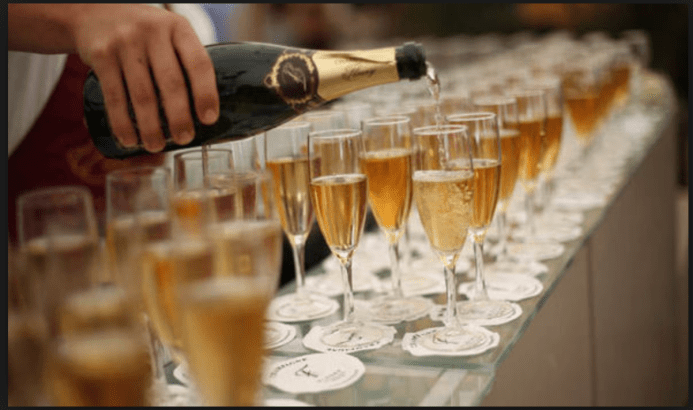
Sparkling wine type and regions
There are sparkling wines made all over the world, each with their own characteristics and flavors. Some of the most popular include: Cava from Spain, Prosecco from Veneto, Italy, Asti and Moscato d’Asti from Piedmont, Italy, Sekt from Germany and Austria, Crémant from other regions of France
Tipo de vino espumoso y regiones
En el mundo hay muchos vinos espumosos, cada uno con sus propias características y sabores. Algunos de los más populares incluyen: Cava desde España, Prosecco desde Veneto, Italia, Asti y Moscato d’Asti de Piamonte, Italia, Sekt de Alemania y Austria
Crémant de otras regiones de Francia

A Champagne glass is a form of stemware designed specifically to enhance the pleasure of drinking champagne. The two most common forms are the flute and coupe. In each the stem allows the drinker to hold the glass without affecting the temperature of the drink, making them readily adaptable to consuming other sparkling wines and certain beers.
Un vaso de Champagne esta diseñado específicamente para mejorar el placer de beber champán. Las dos formas más comunes son la flauta y el coupé. En cada uno de ellos permite al bebedor sujetar el vaso sin afectar la temperatura de la bebida, haciéndolas fácilmente adaptables al consumo de otros vinos espumosos.
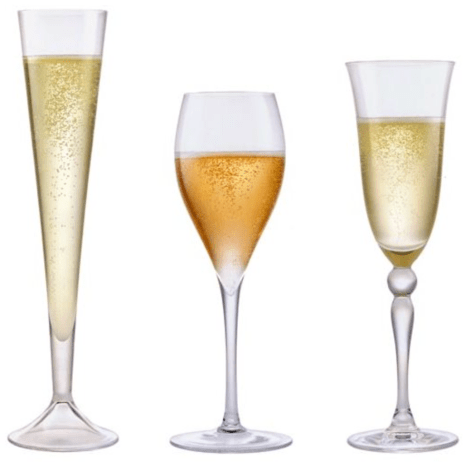
Flute
The champagne flute is a stem glass with either a tall tapered conical shape or elongated slender bowl, generally holding about 6 to 10 US fl oz (180 to 300 ml) of liquid.
The champagne flute was developed along with other wine stemware in the early 1700s as the preferred shape for sparkling wine as materials for drinking vessels shifted from metal and ceramic to glassware.Initially, the flute was tall, conical, and slender; by the 20th century preferences changed from a straight-sided glass to one which curved inward slightly near the lip.
This inward taper is designed to retain champagne’s signature carbonation by reducing the surface area for it to escape. Nucleation in a champagne glass helps form the wine’s bubbles; too much surface area allows carbonation to fizzle out quickly. More bubbles create greater texture in the taster’s mouth, and a flute’s deep bowl allows for greater visual effect of bubbles rising to the top. The flute’s narrow cross-section also minimizes the oxygen-to-wine ratio, which enhances both the wine’s aroma and taste.
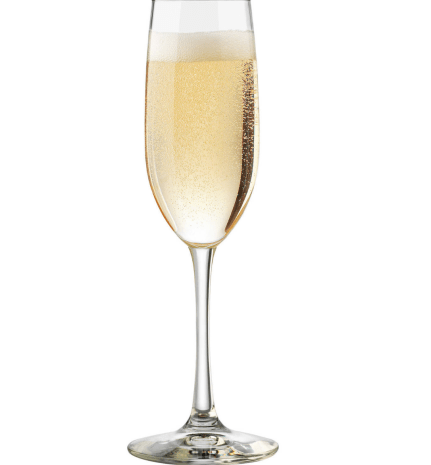
Copa de Flauta
La copa flauta de champaña es un vaso de tamaño alto alargado y delgado, que generalmente sostiene (180 a 300 ml) de líquido.
La copa flauta de champán se desarrolló junto con otros vasos de vino a principios de 1700, como la forma preferida para el vino espumoso, desplazado al metal, la cerámica y la cristalería. Inicialmente, la flauta era alta, cónica y esbelta.
Esta forma está diseñada para retener la carbonización del champán reduciendo la superficie para que escape. La nucleación en una copa de champán ayuda a formar las burbujas del vino; Más burbujas crean una mayor textura en la boca del catador, y un cuenco profundo de la flauta permite un mayor efecto visual de las burbujas que suben a la parte superior. La estrecha sección transversal de la flauta también minimiza la relación entre oxígeno y vino, lo que mejora tanto el aroma como el sabor del vino.
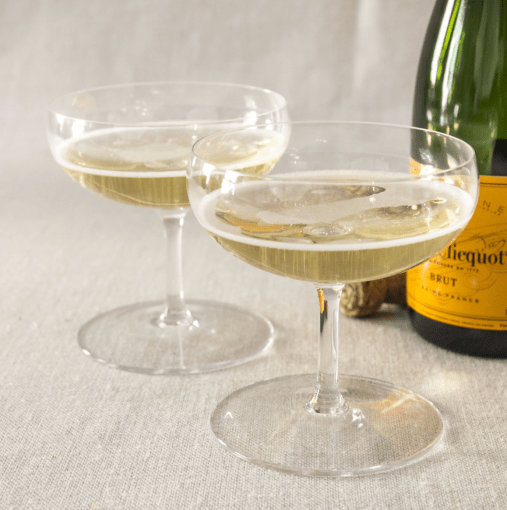
Coupe
The champagne coupe is a shallow, broad-bowled, saucer shaped stemmed glass generally capable of containing 4 to 8 US fl oz (120 to 240 ml) of liquid. Legend has it the shape of the coupe was modelled on the breast of French queen Marie Antoinette, but the glass was designed in England over a century earlier especially for sparkling wine and champagne in 1663.The coupe was fashionable in France from its introduction in the 1700s until the 1970s,and in the United States from the 1930s to the 1980s.
Copa Coupe
El coupé de champán es un vaso con forma de plato, de poca profundidad, generalmente capaz de contener (120 a 240 ml) de líquido. La leyenda tiene la forma del coupé fue modelado en el pecho de la reina francesa Marie Antonieta, pero el vidrio fue diseñado en Inglaterra más de un siglo antes, especialmente para el vino espumoso y champán en 1663. El coupé estaba de moda en Francia desde su introducción en el 1700s hasta los años 70, y en los Estados Unidos de los años 30 a los años 80.
Tulip
Champagne is also served in a tulip glass. The white wine tulip is distinguishable from the champagne flute by its wider flared body and mouth. Some oenophiles prefer the tulip glass, as it permits the drinker to get more of the aroma than a traditional flute while the mouth is still narrow enough to avoid quick loss of carbonation.The glass maker Riedel particularly criticizes flutes as one-dimensional, imparing drinkers’ ability to appreciate a wine’s full range of aromas and taste profiles.
Copa Tulipán
El champán también se sirve en un vaso de forma tulipán. El tulipán se diferencia de la flauta de champán por ser más grande, y con boca más ancha. Algunos enófilos prefieren el vaso de tulipán, ya que les permite obtener más aroma de la bebida, sin embargo su boca es todavía lo suficientemente estrecha para evitar la rápida pérdida de carbonatación. El fabricante de vidrio Riedel particularmente critica las flautas como unidimensional, ya que no permite percivir y apreciar la gama completa de aromas y perfumes de un vino.

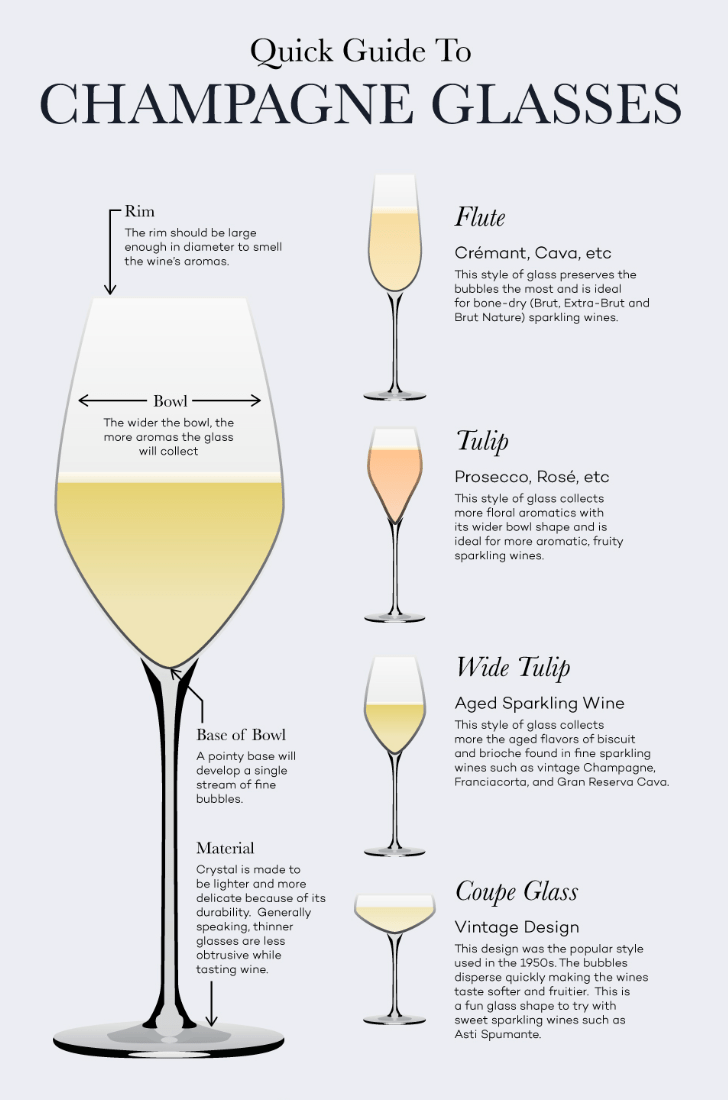
Here are a perfect guide how to select the best glass for you.
En la actualidad se recomienda la copa tulipán, como la perfecta opción para el champagne.
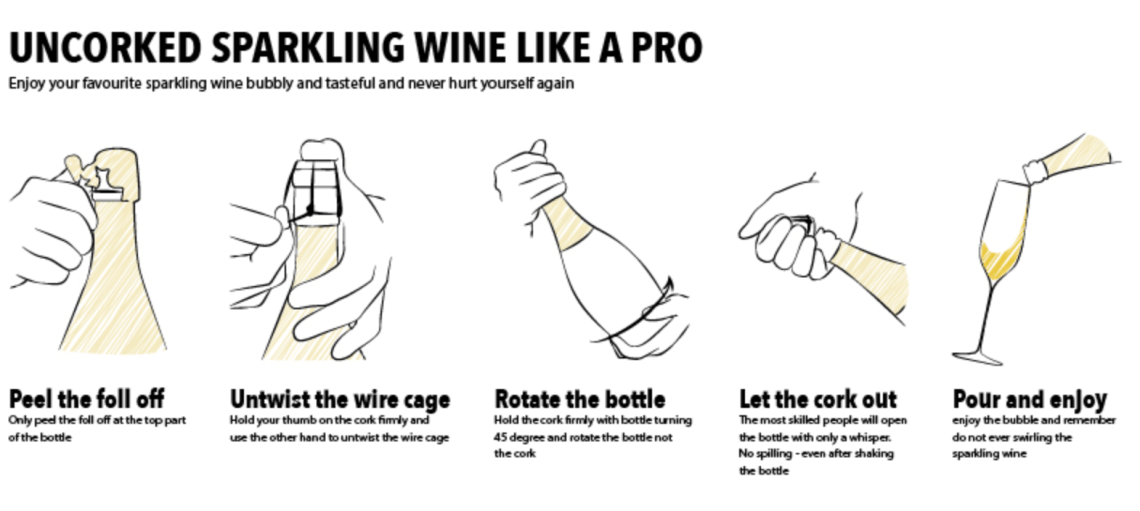
Be the master of the party or any celebration requiere to open a bottle perfect and this are the best way to preforming without any mistake.
La mejor forma de abrir una botella de vino espumoso es girando por la parte de abajo y suavemente removiendo el corcho del otro lado, mantenga la botella con unos 45 grados al abrir.
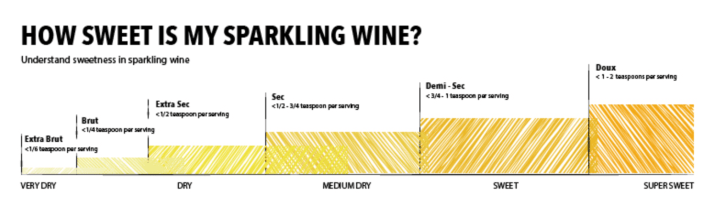
You might notice not every sparkling wine is the same and colour indicate the type and favor.
Habrán notado que el color de esta bebida espumosa varía, componiéndose entre más claro es el vino más seco y a medida que su color se va tornando más miel, el vino es más dulce.
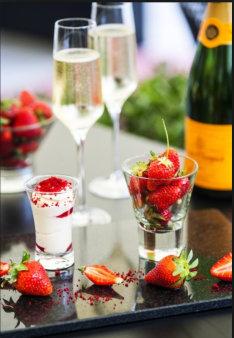
Strawberry can also intesify sparkling wine favor making just another healthy pleasure.
También se dice que las fresas suelen intensificar su sabor a nuestro paladar.
What is next? just have fun and celebrated!!
Que nos queda? pues solo disfrutar y celebrar!!


 Positive Diva Magazine